Top 10 High-Yield Fixed Deposits (FD) in India: A 2026 Investment Analysis
Discover the best high-yield fixed deposits in India for 2026. Compare rates, tenure options, and maximize your investment returns.
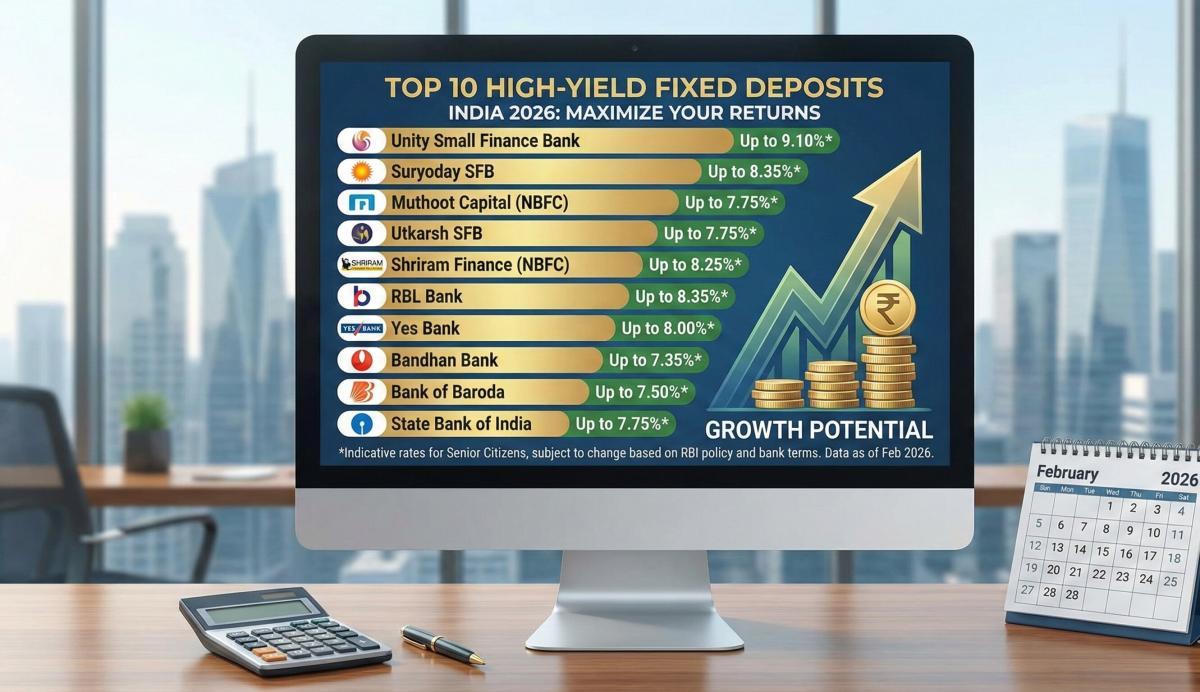
Table of Contents
If you are waiting for interest rates to hit the 9% peaks of the past, you might be waiting in vain.
In 2026, the economic narrative has shifted. With the Reserve Bank of India (RBI) effectively managing retail inflation within the 4-5% band, the aggressive rate-hike cycles of 2023-24 are behind us. We are now in a "Plateau Phase." While the Repo Rate remains stable at 6.25%, banks are no longer desperate for liquidity.
However, a unique anomaly exists in the market right now. While giant lenders like SBI and HDFC have moderated their offers, Small Finance Banks (SFBs) and select private challengers are still offering aggressive premiums to capture market share.
If you have ₹5 Lakhs sitting in a savings account, you are losing money to inflation every day. The right FD in 2026 can still earn you a real return of 3-4%. Here is your expert roadmap to locking in the best rates before the next cycle of rate cuts begins.
The 2026 Rate Sheet: Who Pays What?
Let’s cut through the marketing noise. I have curated the top performing FDs as of January 2026. Note that "Senior Citizen" rates typically include the standard 0.50% premium.
|
Bank Category |
Bank Name |
Best Tenure |
General Public Rate |
Senior Citizen Rate |
Safety Score (DICGC) |
|
High Yield (SFB) |
Suryoday SFB |
5 Years |
8.00% |
8.50% |
Covered up to ₹5L |
|
High Yield (SFB) |
Unity SFB |
1001 Days |
7.75% |
8.25% |
Covered up to ₹5L |
|
High Yield (SFB) |
Utkarsh SFB |
2-3 Years |
7.50% |
8.00% |
Covered up to ₹5L |
|
Mid-Cap Private |
RBL Bank |
18-24 Months |
7.20% |
7.70% |
High |
|
Mid-Cap Private |
Bandhan Bank |
1 Year |
7.20% |
7.70% |
High |
|
Mid-Cap Private |
IndusInd Bank |
1-2 Years |
7.00% |
7.50% |
High |
|
Big Lender |
HDFC Bank |
18 Months |
6.60% |
7.10% |
Very High |
|
Big Lender |
ICICI Bank |
15 Months |
6.70% |
7.20% |
Very High |
|
PSU Giant |
SBI |
400 Days (Amrit) |
6.80% |
7.30% |
Sovereign Backing |
|
PSU Giant |
Bank of Baroda |
399 Days |
6.75% |
7.25% |
Sovereign Backing |
Deep Dive: The Top 3 "Yield Kings" of 2026
1. The Inflation Beater: Suryoday Small Finance Bank
If your goal is pure return on investment (ROI), Suryoday is currently the leader of the pack.
- The Offer: 8.50% for Senior Citizens on 5-year deposits.
- The Pro: Unlike many SFBs that only offer high rates on odd tenures (like 444 days), Suryoday is offering this on the standard 5-year Tax Saver FD. This kills two birds with one stone: High Yield + Section 80C Tax Deduction.
- The Con: Branch presence is limited to specific states. You must be comfortable with Video KYC and mobile banking.
2. The "Odd Tenure" Specialist: Unity Small Finance Bank
Unity has carved a niche with its 1001 Days tenure.
- The Offer: 7.75% (General) / 8.25% (Senior).
- The Strategy: This specific tenure (approx 2.7 years) is the "sweet spot." It doesn't lock your money away for 5 years, but it gives you a better rate than a 1-year FD.
- The 2026 Context: Unity is aggressive because it is digital-first. Their app experience is slick, and pre-mature withdrawal penalties are standard (1%).
3. The "Safe Middle": RBL Bank / IndusInd Bank
If you are nervous about "Small Finance" banks but disappointed by SBI’s rates, these mid-sized private banks are your bridge.
- The Offer: ~7.50% for Senior Citizens.
- The Pro: These are full-service universal banks with robust capital adequacy ratios. They offer a great balance of safety and yield.
- The Strategy: Use them for your "core" corpus (e.g., ₹10-20 Lakhs) where you want peace of mind without settling for 6.5%.
Senior Editor’s Verdict: The "Laddering" Strategy
In 2026, putting all your money into one 5-year FD is a mistake. If rates rise, you lose out. If you need money, you pay a penalty.
"My Advice: Don't chase the highest rate blindly. Build an 'FD Ladder'."
How to build a ₹10 Lakh Ladder:
- ₹2 Lakhs in Bandhan Bank (1 Year) @ 7.20% $\rightarrow$ Liquidity for next year.
- ₹3 Lakhs in Unity SFB (1001 Days) @ 7.75% $\rightarrow$ Mid-term growth.
- ₹3 Lakhs in Suryoday SFB (5 Years) @ 8.00% $\rightarrow$ Long-term inflation hedge.
- ₹2 Lakhs in SBI/HDFC (Floating FD/Sweep-in) $\rightarrow$ Immediate emergency fund.
Result: You have money maturing every year, you average out interest rate risks, and you keep your total exposure to any single SFB under the ₹5 Lakh insurance limit.
The Math: The Power of Compounding (2026)
Does a 1.5% difference really matter? Let's run the numbers for a Senior Citizen investing ₹5 Lakhs for 5 Years.
- Scenario A: SBI (Big Bank) @ 7.05%
- Maturity Value: ₹7,09,000
- Profit: ₹2.09 Lakhs
- Scenario B: Suryoday SFB (High Yield) @ 8.50%
- Maturity Value: ₹7,61,000
- Profit: ₹2.61 Lakhs
The Difference: ₹52,000.
By simply choosing the right bank code, you earn an extra ₹50k—enough to cover a health insurance premium or a vacation.
Security & Risks: The DICGC Safety Net
This is the most critical section. In 2026, "Small Finance Bank" does not mean "Risky Bank" if you know the rules.
- The Rule: The Deposit Insurance and Credit Guarantee Corporation (DICGC) insures your deposits up to ₹5 Lakhs.
- Scope: This covers Principal + Interest.
- The Strategy: If you want to invest ₹10 Lakhs in Unity SFB, do not open one FD.
- Open one FD of ₹5 Lakhs in your name.
- Open a second FD of ₹5 Lakhs in your Spouse's name (or as a joint account with different primary holder).
- Why? The insurance limit is per depositor, per bank. Splitting accounts effectively doubles your coverage.
Regulatory Alert: DICGC coverage applies to all scheduled commercial banks, including SFBs. However, it does not cover Corporate FDs (like Shriram Finance or Bajaj Finance). Corporate FDs carry higher risk and are rated by CRISIL/ICRA, not insured by the Govt.
Frequently Asked Questions (FAQ)
1. Is FD interest taxable in 2026?
Yes. FDs are taxed according to your income slab.
- TDS: Banks deduct 10% TDS if interest exceeds ₹40,000 (₹50,000 for Seniors).
- Form 15G/15H: If your total income is below the taxable limit, submit these forms in April to prevent TDS deduction.
2. What is a "Callable" vs. "Non-Callable" FD?
- Callable: You can break it anytime (with penalty).
- Non-Callable: You cannot withdraw money before maturity, but banks offer 0.10% - 0.20% higher interest.
- Advice: Only choose Non-Callable if you are 100% sure you won't need the funds.
3. Are Corporate FDs better than Bank FDs?
NBFCs (like Bajaj Finance) offer rates up to 8.65%. However, they lack DICGC insurance. In 2026, the risk-reward ratio favors SFBs (8.00% + Insurance) over Corporate FDs (8.65% + No Insurance). Stick to banks for your core savings.
4. Can I open an FD in a bank where I don't have a savings account?
Yes. Most banks now offer "Digital FDs." You complete Video KYC, transfer funds via UPI/NEFT, and the FD is booked. On maturity, funds are credited back to your source bank account.
5. What happens if the bank merges (like Fincare into AU)?
Your FD remains safe. The acquiring bank (e.g., AU Small Finance) honors the original interest rate contract until maturity. You do not lose money in a merger.
Related Blogs
Published on Mar 02, 2026
Planning an FD? Don’t Miss These Top Questions About FD Calculators
Curious how FD calculators work? This guide answers the top questions to help you calculate returns, compare plans, and invest smarter in fixed deposits.
Priya Nair
Senior Compliance Editor at IFSC.co
Published on Mar 02, 2026
PPF (Public Provident Fund) Calculator – Returns, Interest & Planning Guide
A PPF Calculator helps you estimate the maturity value and interest earned on your Public Provident Fund investment. By entering your contribution amount, tenure, and current interest rate, you can project long-term returns and plan your savings effectively.
Priya Nair
Senior Compliance Editor at IFSC.co
Published on Mar 02, 2026
Recurring Deposit (RD) Calculator – Returns, Interest & Maturity Guide
An RD Calculator helps you estimate the maturity amount and interest earned on your Recurring Deposit investment. By entering your monthly deposit, tenure, and interest rate, you can project returns and plan your savings effectively.
Priya Nair
Senior Compliance Editor at IFSC.co
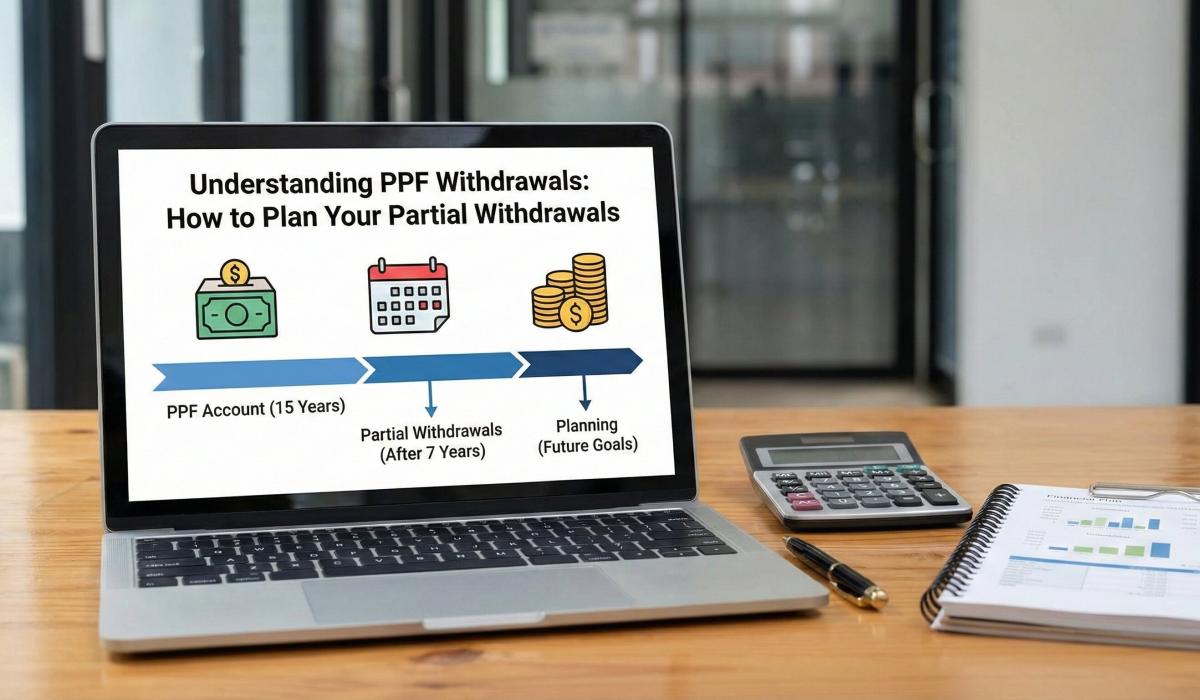
Published on Jun 02, 2025
Understanding PPF Withdrawals: How to Plan Your Partial Withdrawals
Learn the rules and strategies for partial PPF withdrawals to meet financial goals without compromising long-term savings.
Priya Nair
Senior Compliance Editor at IFSC.co
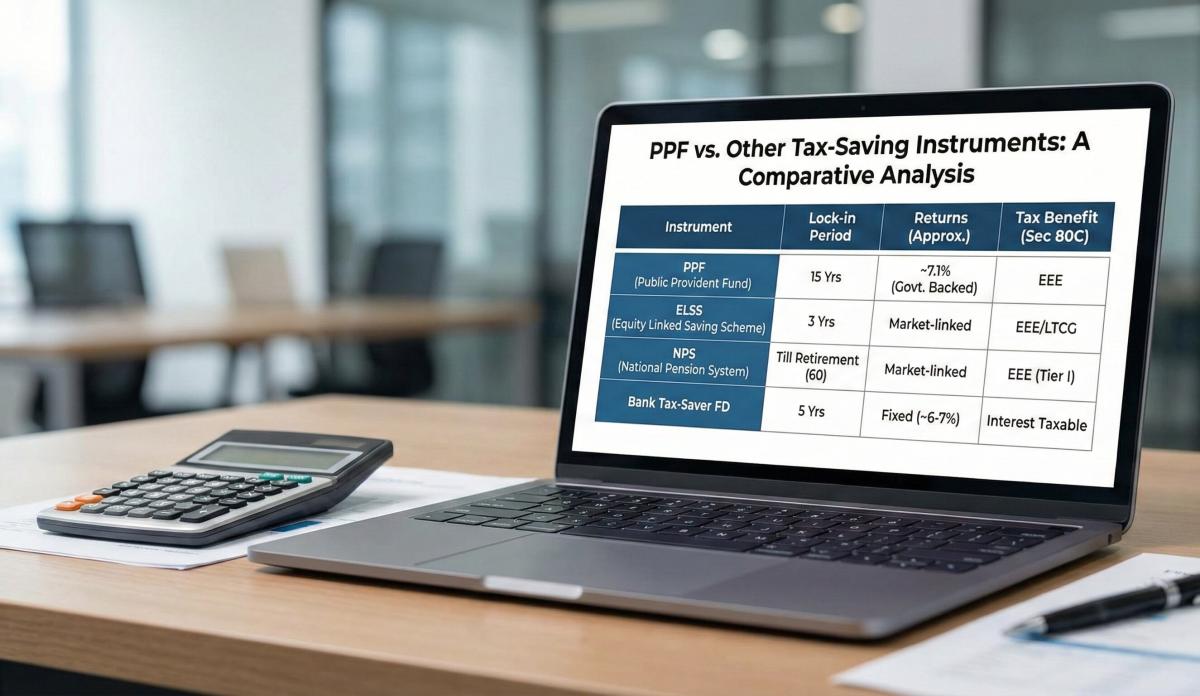
Published on May 15, 2025
PPF vs. Other Tax-Saving Instruments: A Comparative Analysis
Discover the key differences between PPF vs. other tax-saving instruments like NPS, ELSS, and FDs. Learn about PPF benefits, tax-saving options, and more.
Arjun Sharma
Content Lead – Banking & Payments
calculate Financial Calculators
EMI Calculator
FD Calculator
GST Calculator
Lumpsum Calculator
Mutual Fund Returns Calculator
PPF Calculator
RD Calculator
SIP Calculator
SWP Calculator
article Latest Blog Posts
A Comprehensive Guide to Home Loan Interest Rates: Fixed vs. Floating in 2026
A detailed 2026 guide to home loan interest rates comparing fixed, floating, and hybrid options. Learn the real cost difference, EMI impact, risks, RBI policies, and which option saves you more over 20 years.
EMI & Loans • 8 MINS READ
Mutual Fund Returns Calculator: How It Works, Accuracy & FAQs Explained
A Mutual Fund Returns Calculator helps you estimate the future value of your mutual fund investment using inputs like investment amount, tenure, contributions, and expected returns. It uses compounding to project potential growth and helps you plan smarter investment decisions.
SIP & Investing • 6 MINS READ
NEFT vs RTGS vs IMPS vs UPI: Which Transfer Method Should You Use?
NEFT, RTGS, IMPS, or UPI — which transfer method should you use? Compare limits, timing, charges and best use cases. Full guide with 2025 RBI & NPCI figures.
Banking & Transfers • 16 MINS READ
New Tax Regime vs Old Tax Regime: A Real-Numbers Comparison for Salaried Indians (FY 2025-26)
New vs old tax regime FY 2025-26 — compare real tax on ₹6L, ₹10L & ₹15L salaries. See who pays zero tax and find your break-even point.
Tax & Financial Planning • 15 MINS READ
Planning an FD? Don’t Miss These Top Questions About FD Calculators
Curious how FD calculators work? This guide answers the top questions to help you calculate returns, compare plans, and invest smarter in fixed deposits.
FD, PPF & Savings • 5 MINS READ