Transaction Timeouts in Banking: Unpacking the Root Causes
Why do bank payments timeout? Explore the technical root causes, from database locks to network latency and third-party API failures in our 2026 guide.
Arjun Sharma
Content Lead – Banking & Payments
10 min read
Table of Contents
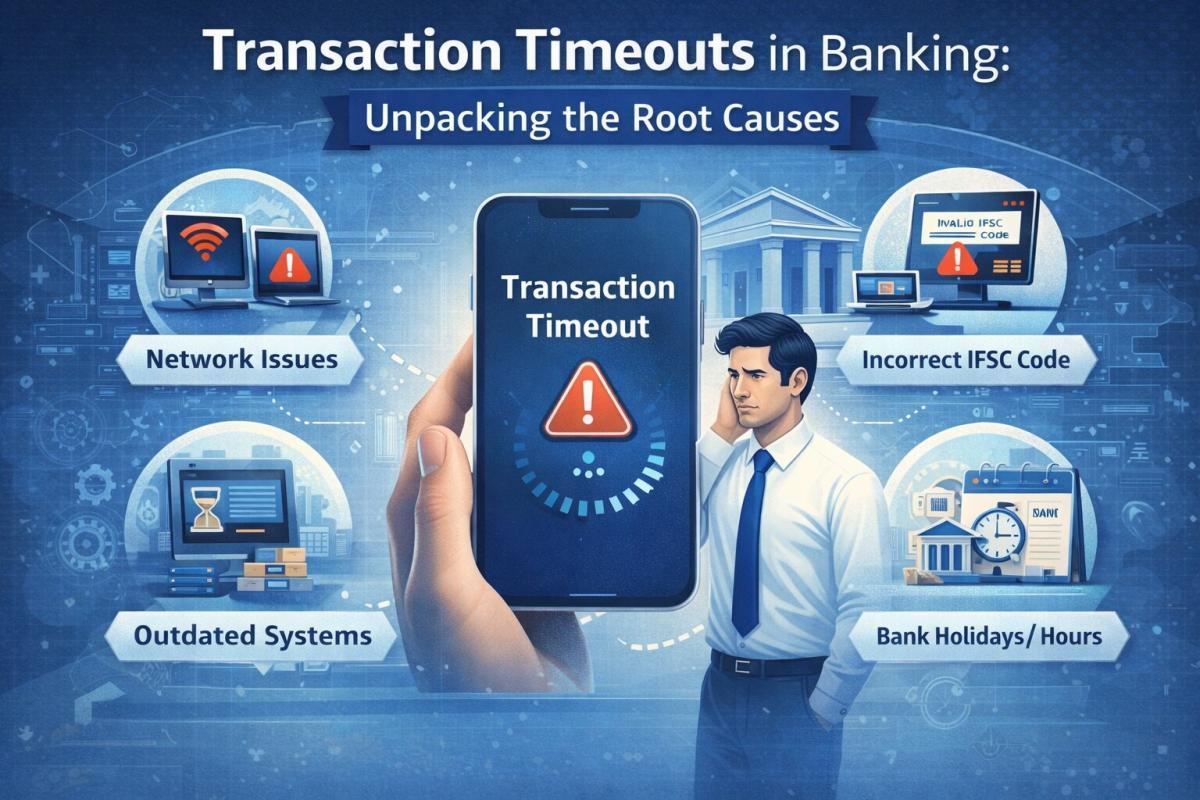
Have you ever been mid-transaction, perhaps buying those concert tickets you’ve been eyeing for months or trying to pay a critical bill, only for the payment to just… hang? That spinning wheel, the agonizing wait, and then, the dreaded “Transaction Timeout” message. It’s infuriating, isn’t it? As someone who’s spent over a decade dissecting the intricate plumbing of financial systems, I can tell you that these seemingly simple failures are often symptomatic of deep-seated complexities. Understanding the reasons behind transaction timeout in banking systems is crucial, not just for the engineers battling them, but for anyone who relies on the seamless flow of digital money, which, let’s face it, is all of us.
Network Latency and Connectivity Issues
One of the most common culprits behind banking transaction timeouts is the unpredictable nature of network latency and connectivity. Imagine your transaction as a tiny digital messenger carrying vital information between your device, your bank’s servers, and potentially a dozen other intermediary systems. If this messenger encounters traffic jams, detours, or outright roadblocks on its journey, delays are inevitable. These delays can stem from congested internet service provider (ISP) networks, sub-optimal routing paths, or even physical damage to fiber optic cables. Even a few hundred milliseconds of extra round-trip time can push a transaction beyond its predefined timeout threshold, especially when multiple hops are involved. The global nature of banking means these digital journeys can span continents.
Furthermore, the reliability of the endpoints themselves plays a significant role. A server experiencing intermittent network card failures, a firewall rule misconfiguration, or an overloaded router can introduce erratic delays that are notoriously difficult to diagnose. While banks invest heavily in redundant network infrastructure and high-speed connections, the internet remains a shared resource. During peak periods, or if a specific region experiences a localized network outage, the ripple effect can cause widespread transaction failures. By 2026, we expect even more sophisticated network monitoring tools, but the fundamental challenge of ensuring instantaneous data flow across vast distances will persist.
Database Bottlenecks and Lock Contention
At the heart of every banking system lies a robust, yet often overburdened, database. This is where every account balance, transaction history, and customer detail resides. When multiple transactions attempt to access or modify the same data simultaneously, the database needs mechanisms to ensure data integrity, primarily through locking. If one transaction holds a lock on a critical piece of data (e.g., an account balance) for too long, other transactions waiting for that lock will queue up. This queuing can quickly escalate, leading to significant delays and, ultimately, timeouts for the waiting transactions. It’s a classic concurrency challenge that database administrators constantly battle.
The performance of the database itself is another critical factor. Slow query execution times, inefficient indexing, or insufficient hardware resources can transform a fast database into a sluggish bottleneck. Imagine a busy cashier trying to serve hundreds of customers with a slow, outdated computer. Each query, each update, takes longer than it should, consuming valuable transaction time. Banks continuously optimize their database schemas and invest in high-performance storage solutions, but the sheer volume of transactions, particularly during peak hours or system-wide events like payroll days, can push even the most robust systems to their limits. Proper database tuning is an art form that directly impacts transaction success rates.
Deadlocks and Transaction Isolation
A particularly insidious form of database contention is a “deadlock.” This occurs when two or more transactions are each waiting for the other to release a resource, creating a circular dependency where neither can proceed. For instance, Transaction A might lock Account X and then try to lock Account Y, while Transaction B simultaneously locks Account Y and tries to lock Account X. Both transactions are stuck, waiting indefinitely. Modern database management systems (DBMS) have sophisticated deadlock detection and resolution mechanisms, typically by aborting one of the transactions to allow the other to complete. However, the aborted transaction will timeout from the user’s perspective, requiring a retry. This is a nuanced issue that often requires deep analysis of application code and database access patterns to mitigate effectively. Understanding transaction isolation levels also becomes critical here; while higher isolation levels offer stronger data consistency, they can also increase the likelihood of lock contention and deadlocks, necessitating a careful balance between performance and data integrity.
Third-Party Integrations and External Systems
Modern banking transactions rarely occur in isolation. They often involve a complex dance between various internal systems and numerous external third-party services. Think about an online purchase: your bank, the merchant’s bank, the payment gateway (like Visa or MasterCard), fraud detection services, and potentially identity verification providers all need to communicate and respond within a tight timeframe. If any one of these external systems experiences a slowdown, network issue, or internal processing delay, the entire transaction can be held up, leading to a timeout from your perspective. It’s a chain reaction where the strength of the chain is only as good as its weakest link.
These external dependencies introduce a layer of unpredictability that banks must constantly manage. While banks perform due diligence on their partners, they ultimately have less control over the performance and availability of these third-party systems. A payment gateway experiencing a surge in traffic, a credit card network having a brief outage, or a fraud detection engine taking longer to analyze a complex transaction can all contribute to a timeout. Banks often implement retry mechanisms and circuit breakers to gracefully handle these transient failures, but some timeouts are simply unavoidable when an external service becomes unresponsive. This complex interoperability is a significant challenge for financial institutions as they strive for real-time processing in a fragmented ecosystem. For more information on payment system resilience, you might find resources from the Bank for International Settlements insightful.
System Overload and Resource Exhaustion
Even the most meticulously designed banking systems have a finite capacity. When the volume of transactions or user requests exceeds what the system’s hardware and software infrastructure can handle, it leads to system overload. Imagine a highway designed for 1,000 cars per hour suddenly needing to accommodate 10,000. Traffic grinds to a halt. Similarly, banking servers can become overwhelmed, leading to delays in processing requests, increased response times, and ultimately, transaction timeouts. This can happen during peak business hours, major sales events, or even due to unexpected spikes caused by news events or system glitches elsewhere.
Resource exhaustion often manifests in various ways: CPU utilization hitting 100%, memory running out, or disk I/O becoming a bottleneck. When a server is struggling to keep up, individual processes and threads vying for resources will experience delays. Transactions might be queued up, waiting for available processing power, but if the wait exceeds the predefined timeout period, they fail. Proactive capacity planning, load balancing, and auto-scaling technologies are critical for banks to manage these fluctuations. However, predicting every surge in demand is incredibly challenging, and sometimes, even well-prepared systems can be caught off guard. We anticipate that by 2026, AI-driven predictive analytics will play a much larger role in dynamic resource allocation to mitigate these issues.
Application Layer Logic and Configuration Errors
Finally, let’s not overlook the application layer itself – the actual software code and its configuration that orchestrates the banking transaction. Errors or inefficiencies within this code can directly lead to timeouts. For example, an application might contain an inefficient algorithm that processes data too slowly, or it might be making excessive, sequential calls to other services instead of parallelizing them. A bug that causes an infinite loop or a long-running, non-optimized database query initiated by the application can easily consume more time than the transaction timeout allows.
Beyond the code, configuration errors are a surprisingly common source of timeouts. Incorrectly set timeout values (e.g., a system expecting a response in 5 seconds, but the downstream service is configured to respond in 10), misconfigured connection pools, or improperly set retry policies can all contribute. A classic example is a system designed to wait 30 seconds for an external service, while the external service itself has a 15-second timeout. This mismatch guarantees failure if the external service hits its limit. Diligent code reviews, robust testing (including performance and stress testing), and rigorous configuration management practices are essential to minimize these often subtle yet impactful issues. The complexity of modern microservices architectures, while offering flexibility, also increases the surface area for such configuration mismatches.
Key Takeaways
- Complexity is the Norm: Banking transactions are rarely simple, involving multiple internal and external systems whose collective performance dictates success or failure.
- Network and Database are Foundation: Issues with connectivity, latency, database contention, or inefficient queries are fundamental causes of delays that lead to timeouts.
- External Dependencies are Critical: The reliability of third-party payment gateways, fraud detection, and other services directly impacts a bank’s ability to process transactions in time.
- Proactive Management is Essential: Banks combat timeouts through rigorous capacity planning, performance optimization, meticulous code review, and advanced monitoring, but complete elimination is nearly impossible due to the distributed nature of the internet and financial ecosystem.
Frequently Asked Questions
What is a typical transaction timeout period in banking?
Transaction timeout periods can vary significantly depending on the type of transaction and the specific banking system involved. For real-time online payments, it might be as short as 10-30 seconds. For batch processes or less time-sensitive operations, it could extend to several minutes. These periods are carefully calibrated to balance user experience with system resource utilization and fraud prevention.
Can I, as a user, do anything to prevent banking transaction timeouts?
While most causes of timeouts are beyond a user’s direct control, there are a few things you can do. Ensure you have a stable and strong internet connection. Avoid initiating critical transactions during known peak periods if possible. If a transaction times out, wait a few minutes before retrying, as the underlying issue might be transient. Always verify if the transaction went through or not before attempting multiple retries to avoid duplicate charges.
How do banks detect and resolve transaction timeouts?
Banks employ sophisticated monitoring systems that track transaction statuses, network performance, database metrics, and application health in real-time. Alerts are triggered for unusual delays or failures. Resolution involves a multi-pronged approach: identifying the bottleneck (network, database, third-party, application), applying fixes (e.g., restarting services, optimizing queries, rerouting traffic), and often communicating with affected third parties. For a deeper dive into financial market infrastructure resilience, the Financial Stability Board offers valuable insights.
What is the impact of transaction timeouts on financial stability?
While individual transaction timeouts are frustrating, widespread or systemic timeouts can have a significant impact on financial stability. They can erode public trust in digital banking, disrupt commerce, and create liquidity issues if large volumes of funds are held in an indeterminate state. This is why financial regulators globally emphasize the resilience and reliability of payment systems, viewing them as critical national infrastructure.
Conclusion
The humble transaction timeout, often a source of minor frustration for us, is a beacon highlighting the immense complexity and delicate balance inherent in modern banking systems. It’s a constant battle against network unpredictability, database contention, the whims of third-party services, and the subtle intricacies of application code. For banks, it’s not just about processing money; it’s about ensuring trust and reliability in an increasingly interconnected and real-time financial world. As we look towards 2026 and beyond, the pursuit of instantaneous, fail-proof transactions will continue to drive innovation and meticulous engineering across the global financial landscape.
Related Blogs
Published on Apr 09, 2026
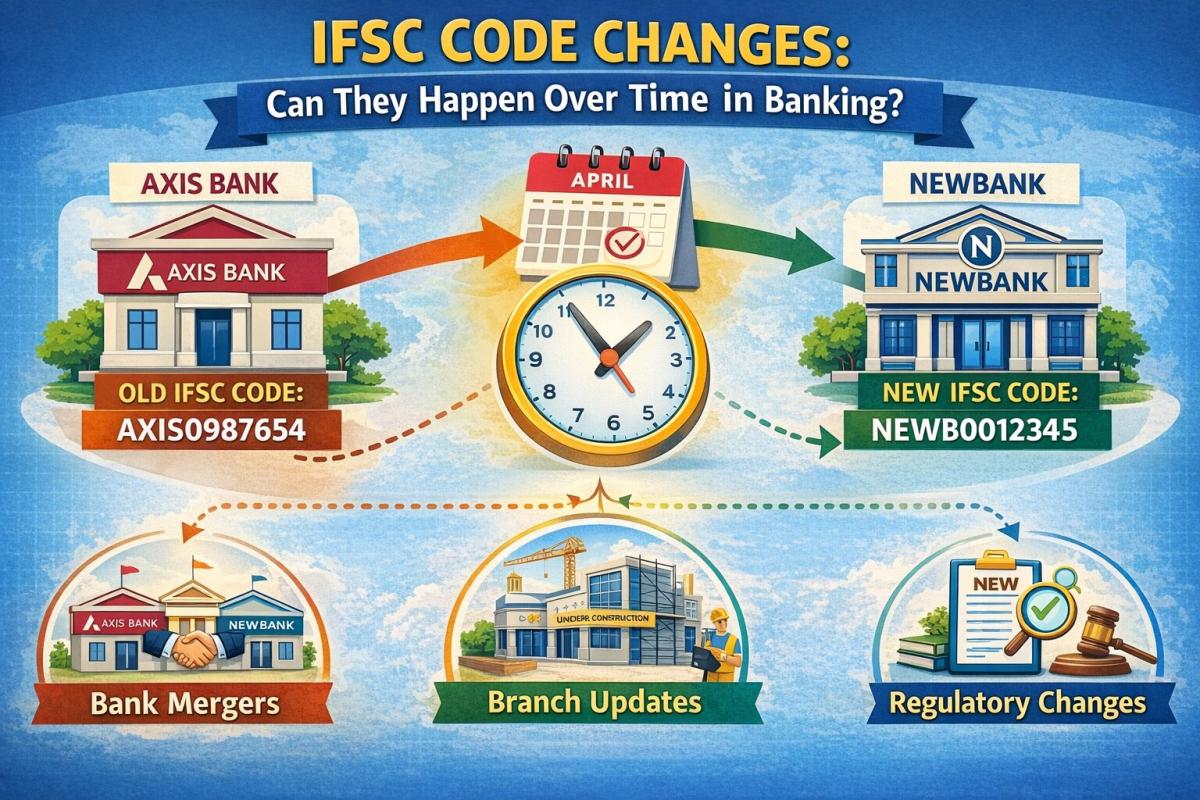
IFSC Code Changes: Can They Happen Over Time in Banking?
Does your IFSC code stay the same forever? Learn why bank mergers, relocations, and RBI 2026 updates cause IFSC changes and how to update your records.
Arjun Sharma
Content Lead – Banking & Payments

Published on Apr 09, 2026
IMPS Transaction Speed: Technical Mechanics Explained
How is IMPS so fast? Discover the technical mechanics behind IMPS transaction speed, including NPCI's central switch and ISO 20022 messaging standards.
Arjun Sharma
Content Lead – Banking & Payments
Published on Mar 30, 2026
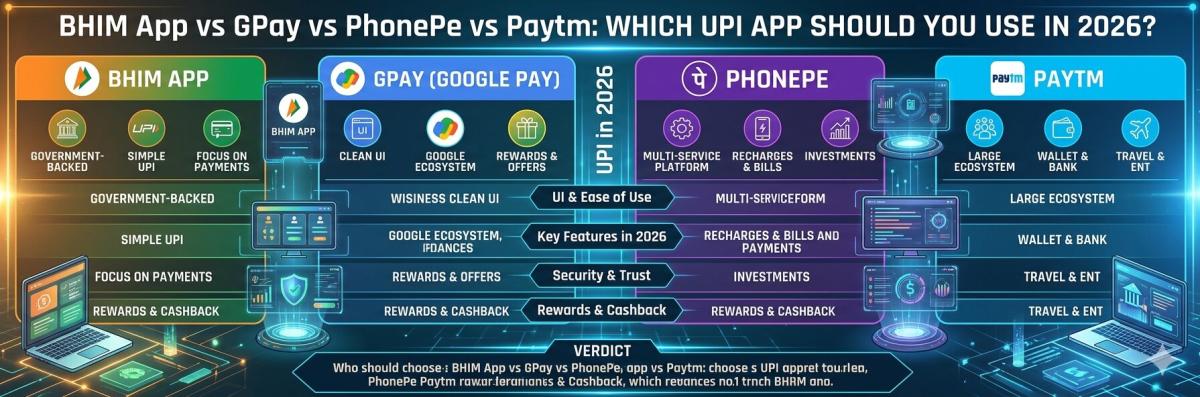
BHIM App vs GPay vs PhonePe vs Paytm: Which UPI App Should You Use in 2026?
Confused between BHIM, Google Pay, PhonePe or Paytm, this in-depth guide explains differences, pros and cons, and helps you choose the best UPI app in India based on your usage.
Arjun Sharma
Content Lead – Banking & Payments
Published on Mar 25, 2026
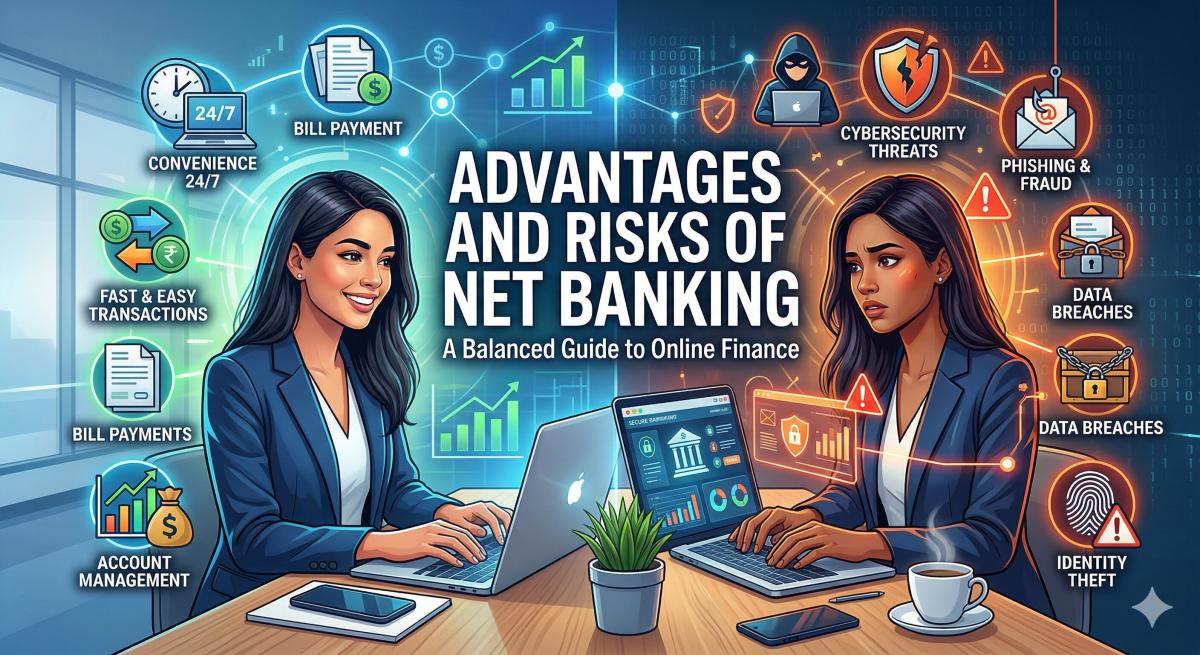
Advantages and Risks of Net Banking
Learn the advantages and risks of net banking, including convenience, speed, and security concerns. Understand how to use online banking safely.
Priya Nair
Senior Compliance Editor at IFSC.co
Published on Mar 25, 2026
4 Things you can do with your online banking account
Discover 4 useful things you can do with your online banking account, from paying bills to applying for loans and earning rewards easily.
Arjun Sharma
Content Lead – Banking & Payments
calculate Financial Calculators
EMI Calculator
FD Calculator
GST Calculator
Lumpsum Calculator
Mutual Fund Returns Calculator
PPF Calculator
RD Calculator
SIP Calculator
SWP Calculator
article Latest Blog Posts
ELSS vs PPF vs NPS: Which Tax-Saving Investment Gives the Best Returns?
Compare ELSS vs PPF vs NPS to find the best tax-saving investment. Understand returns, lock-in periods, and features to choose what suits your goals.
SIP & Investing • 11 MINS READ
How to Start SIP with ₹500 Per Month: Beginner's Guide to Mutual Funds
Learn how to start a SIP with ₹500 per month in mutual funds. Simple beginner’s guide to investing, building wealth, and growing money with small steps.
SIP & Investing • 13 MINS READ
Senior Citizen FD Rates 2026: Which Banks Offer the Highest Interest?
Compare senior citizen FD rates in 2026 and find which banks offer the highest interest. Learn about returns, tenures, and tips to choose the best FD.
FD, PPF & Savings • 12 MINS READ
Sukanya Samriddhi Yojana (SSY): Interest Rate, Rules & Calculator Guide 2026
Learn about Sukanya Samriddhi Yojana (SSY) including eligibility criteria, required documentation, step by step application process, tax benefits explanation and comparison b/w SSY, PPF and FD
FD, PPF & Savings • 11 MINS READ
2 reasons why online banking is important in today’s COVID-19 situation
Discover why online banking became essential during COVID-19. Learn how digital banking ensured safety, convenience, and uninterrupted financial services.
Digital Banking • 4 MINS READ